A complete bedroom needs more than a bed. Nightstands, clothing storage, and a dressing table can improve convenience, organization, and daily comfort. However, not every bedroom requires every furniture piece.
As a bedroom furniture manufacturer, Chicasa addresses the fact that the key is to prioritize bedroom furniture according to room size, daily routines, storage requirements, and budget, based on the experiences of our clients, homeowners, interior designers, and project procurement teams. This guide explains the essential pieces and how to select them efficiently.
What Furniture Is Essential in a Complete Bedroom?
A typical bedroom furniture plan starts with three main pieces: a bed, nightstands, and, when needed, a dressing table. Wardrobes and additional seating depend on the room’s layout and intended use.
Bed — The Foundation of the Bedroom
The bed is the primary piece of bedroom furniture. It determines the room’s layout and influences the placement of nightstands, wardrobes, and other items.
When selecting a bed, consider:
- Size: Match the bed to the number of users and available floor space.
- Frame and headboard: Choose a design that suits the room’s style and comfort requirements.
- Storage: Consider an integrated storage bed when additional space is needed.
- Dimensions: Account for the bed frame’s overall dimensions, not just the mattress size.
Confirming the bed size first helps prevent layout problems and ensures other furniture fits comfortably. Buyers comparing different designs can explore custom beds to find options suited to specific bedroom requirements.


Nightstands — Convenient Storage and Bedside Access
Nightstands provide a convenient surface for items used before sleep or immediately after waking. They can hold phones, books, glasses, lamps, and other daily essentials.
The right configuration depends on the room and its occupants:
- One or two nightstands: Two create a balanced arrangement around a double bed, while one may be more practical in a compact room.
- Drawers or open shelves: Drawers conceal personal items; open shelves provide quick access to frequently used belongings.
- Height and proportions: The nightstand should work comfortably with the bed height and leave enough space for movement.
Nightstands should support daily routines without obstructing walkways or making the bedside area feel crowded. For tailored dimensions, finishes, or coordinated designs, buyers can review custom nightstands.


Dressing Tables — Personal Grooming and Daily Organization
A dressing table creates a dedicated space for makeup, skincare, grooming, and personal accessories. Depending on the design, it may include drawers, a mirror, and space for a stool or chair.
Before adding one, consider three factors:
- Usage: Is a dedicated grooming area part of the occupant’s daily routine?
- Storage: Does the user need drawers for cosmetics, jewelry, or other small items?
- Available space: Can the table and seat fit without interfering with wardrobe access or circulation?
A dressing table is useful when it serves a clear purpose, but it is not essential in every bedroom. In smaller rooms, a compact design or a multifunctional surface may be sufficient. Buyers exploring tailored configurations can view custom makeup vanities.


What Other Furniture May a Complete Bedroom Need?
Beyond the core pieces, additional furniture should solve specific storage or lifestyle needs rather than simply fill empty space.
Wardrobes and Chests of Drawers
Wardrobes store hanging garments, while chests of drawers accommodate folded clothing, accessories, and smaller personal items. Some bedrooms already have built-in wardrobes, making additional storage furniture unnecessary.
Before adding a freestanding wardrobe or chest, assess existing storage capacity, clothing volume, and the space needed to open doors and drawers.
Bedroom Benches, Accent Chairs, and Additional Seating
A bench at the foot of the bed provides a place to sit or temporarily place clothing. An accent chair can create a reading or relaxation area.
These pieces are optional. Add them only when the room has enough space and the occupants will use them regularly.
Desks, Shelving, and Other Multifunctional Furniture
A bedroom may also serve as a home office or study area. In this case, a desk, office chair, or bookshelf may be more useful than decorative seating.
Multifunctional furniture can help smaller rooms accommodate several activities. However, work, storage, and sleeping zones should remain practical and visually organized.
How to Prioritize Bedroom Furniture by Room Size
Room size affects which furniture pieces can be accommodated comfortably. The objective is to meet essential needs while preserving usable space.
Small Bedrooms — Focus on Essential Functions
Prioritize the bed, necessary bedside access, and sufficient clothing storage. Consider a compact nightstand or a bed with integrated storage if appropriate.
A dressing table, bench, or accent chair should be added only when the layout allows. Avoid choosing oversized furniture simply because it looks attractive in a showroom.
Medium Bedrooms — Balance Comfort and Storage
A medium-sized bedroom can often accommodate a bed, two nightstands, a wardrobe, and a dressing table. The final arrangement depends on room dimensions, door positions, and storage needs.
Coordinate furniture sizes and finishes, but confirm that drawers, wardrobe doors, and seating can be used without obstruction.
Large Bedrooms — Build a Complete Functional Layout
Larger bedrooms may support separate sleeping, dressing, and relaxation areas. A dressing table can define a grooming zone, while a bench or accent chair can provide additional seating.
Even in a spacious room, furniture should serve a clear function. A well-planned arrangement is more useful than filling every available area.
How Homeowners, Designers, and Project Buyers Should Set Priorities
Different buyers evaluate bedroom furniture from different perspectives. A practical selection process should account for daily use, design coordination, or project-wide requirements.
Homeowners — Start with Daily Routines
Homeowners should identify their most important needs before selecting furniture.
- Choose a suitable bed size and frame.
- Determine bedside storage and access requirements.
- Assess clothing storage needs.
- Add a dressing table or extra seating if it supports regular activities.
This approach directs the budget toward frequently used furniture before optional additions.
Interior Designers — Start with Layout and Design Coordination
Designers should confirm room measurements, circulation, door and window positions, lighting, and power outlets before finalizing furniture specifications.
They should also coordinate materials, colors, proportions, and finishes across the bedroom. Furniture needs to work as a complete arrangement rather than as a collection of unrelated pieces.
Project Procurement Teams — Start with Specifications and Repeatability
For residential developments, hotels, and other multi-room projects, procurement teams need to balance design requirements with consistency, durability, and delivery schedules.
Key considerations include:
- Standardized specifications: Confirm dimensions, materials, finishes, hardware, and configuration requirements.
- Customization boundaries: Decide which elements can vary by room type and which must remain consistent.
- Quality requirements: Establish inspection criteria and sample approval procedures before bulk production.
- Commercial planning: Confirm quantities, lead times, packaging, delivery arrangements, and project deadlines.
A clear furniture schedule reduces specification gaps and helps designers, suppliers, and procurement teams coordinate more effectively.
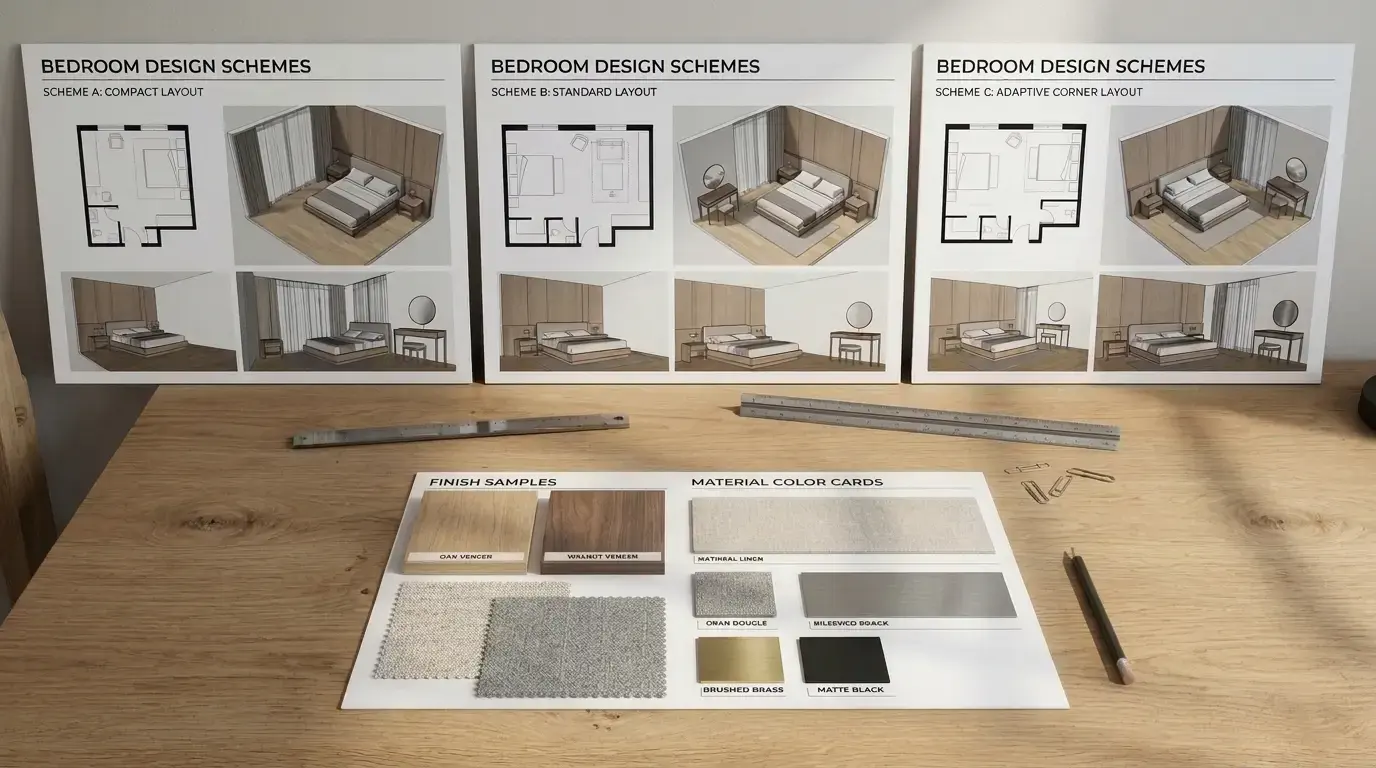
A Practical Bedroom Furniture Priority Checklist
| Furniture | Priority | Main Purpose | When to Add |
|---|---|---|---|
| Bed | Essential | Sleeping and room layout | Every bedroom |
| Nightstand | High | Bedside access and storage | When bedside space is available |
| Wardrobe or clothing storage | Need-dependent | Clothing organization | When existing storage is insufficient |
| Dressing table | Need-dependent | Grooming and personal organization | When daily routines and space justify it |
| Bench or accent chair | Optional | Seating and convenience | When space and budget allow |
| Desk or shelving | Optional | Work, reading, or additional storage | When the bedroom serves multiple functions |
Conclusion: Build a Bedroom Around Essential Functions
A complete bedroom does not need every available furniture piece. Start with a suitable bed, plan bedside access and clothing storage, and add a dressing table or other furniture according to actual needs.
For homeowners, the priority is everyday comfort. For designers, it is layout and visual coordination. For project procurement teams, it is specification consistency, quality, and delivery planning. Matching furniture choices to these priorities produces a more functional and coherent bedroom.
Frequently Asked Questions About Complete Bedroom Furniture
What furniture should every bedroom have?
A bed is the essential foundation of a bedroom. Nightstands and clothing storage improve convenience, while a dressing table and additional seating depend on the occupants’ needs and available space.
Are two nightstands necessary in a bedroom?
No. Two nightstands can create a balanced arrangement around a double bed, but one may be more practical in a small room or a layout with limited bedside space.
Does a complete bedroom need a dressing table?
No. A dressing table is useful for people who need a dedicated grooming and makeup area. If space is limited or the function is rarely used, a compact alternative may be sufficient.
What furniture should be purchased first when furnishing a bedroom?
Start with the bed and overall layout. Then determine bedside access and clothing storage requirements. Add a dressing table, bench, or other furniture after confirming that the essential pieces fit comfortably.
How should project buyers select bedroom furniture for multiple rooms?
Project buyers should establish consistent specifications for dimensions, materials, finishes, hardware, and quality requirements. They should also confirm customization options, sample approvals, production lead times, and delivery arrangements before placing bulk orders.