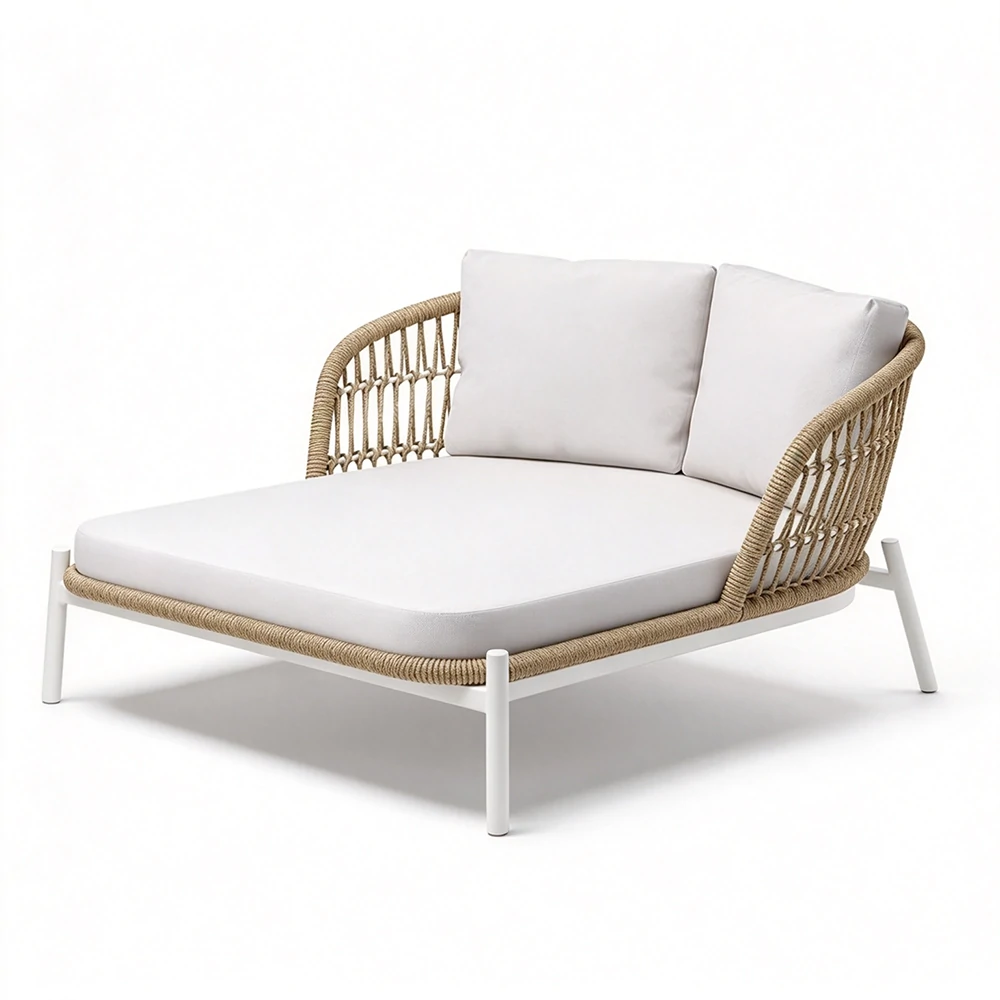
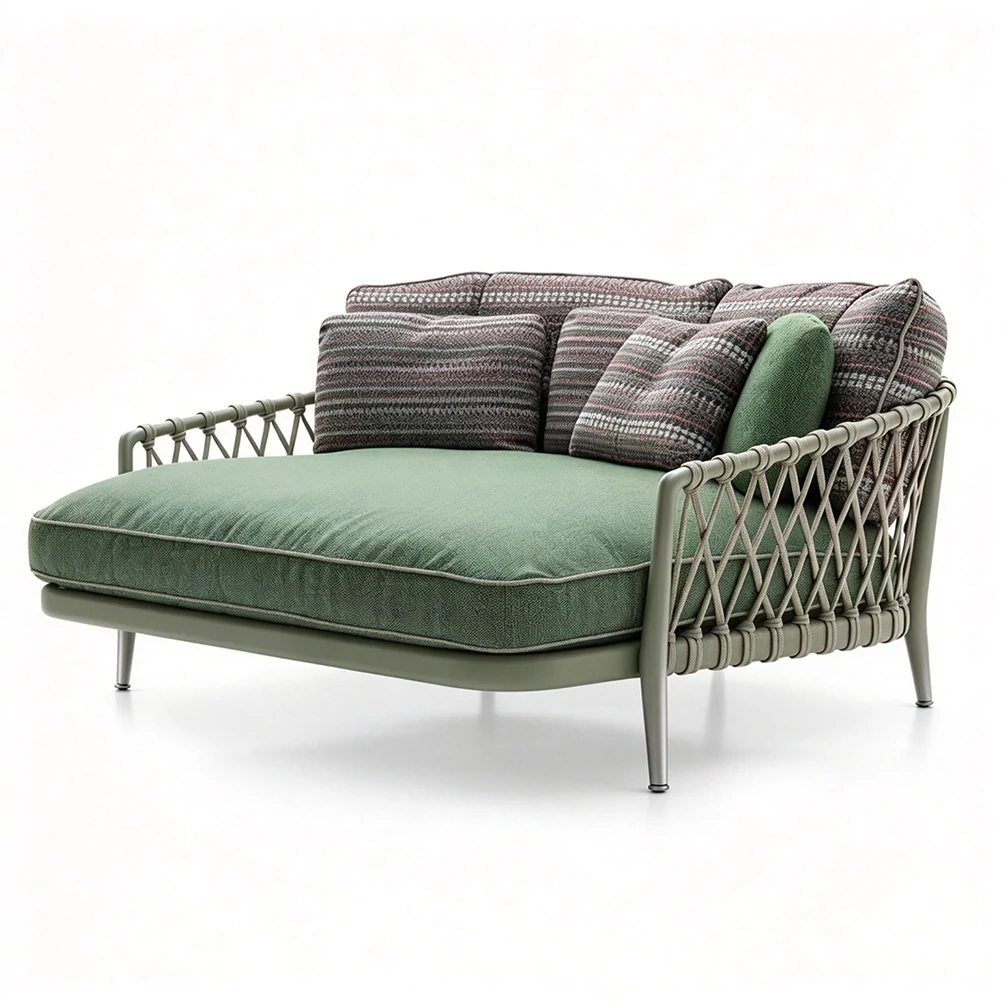
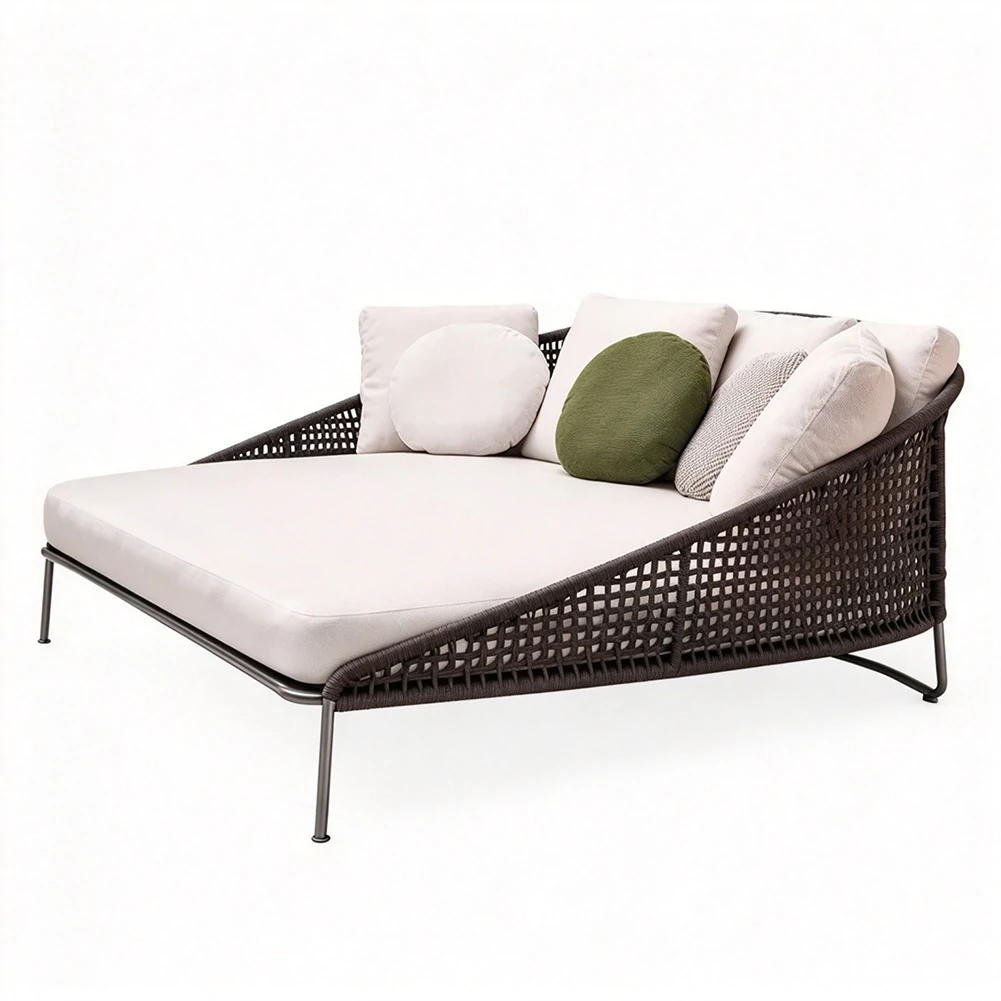
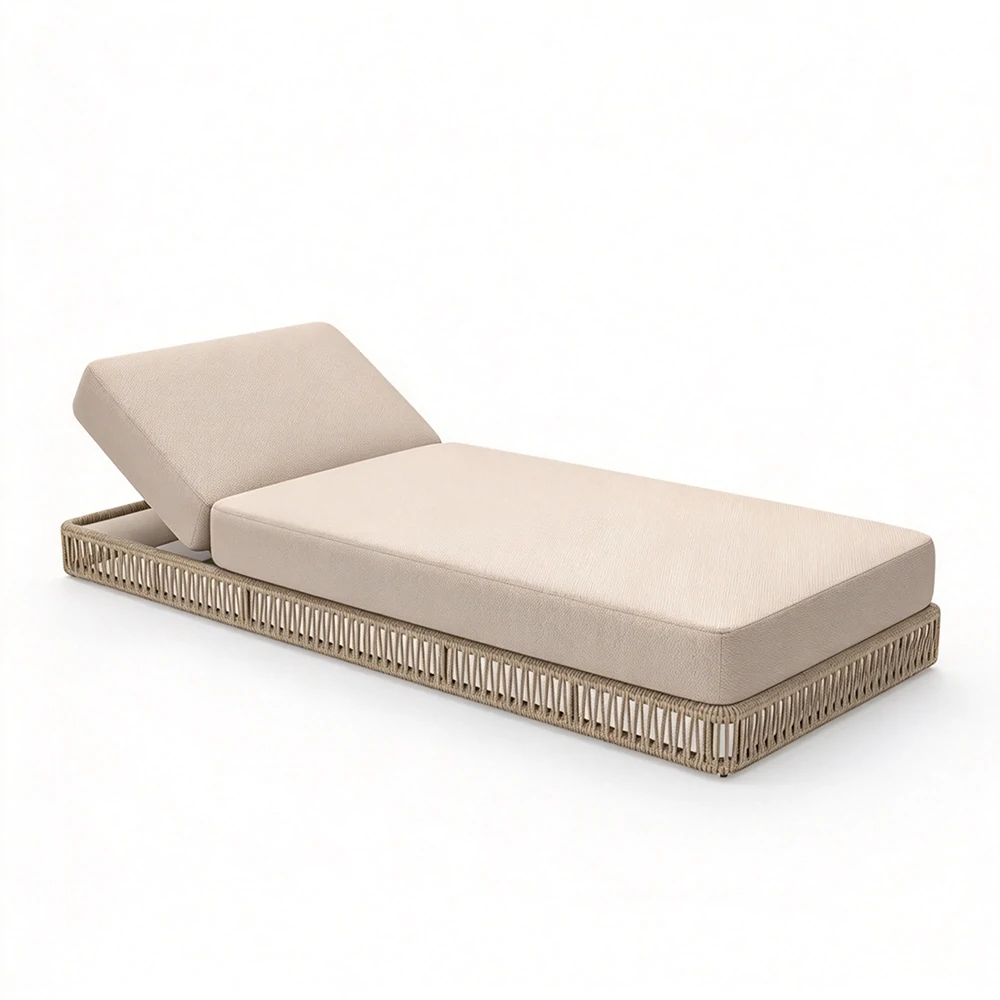
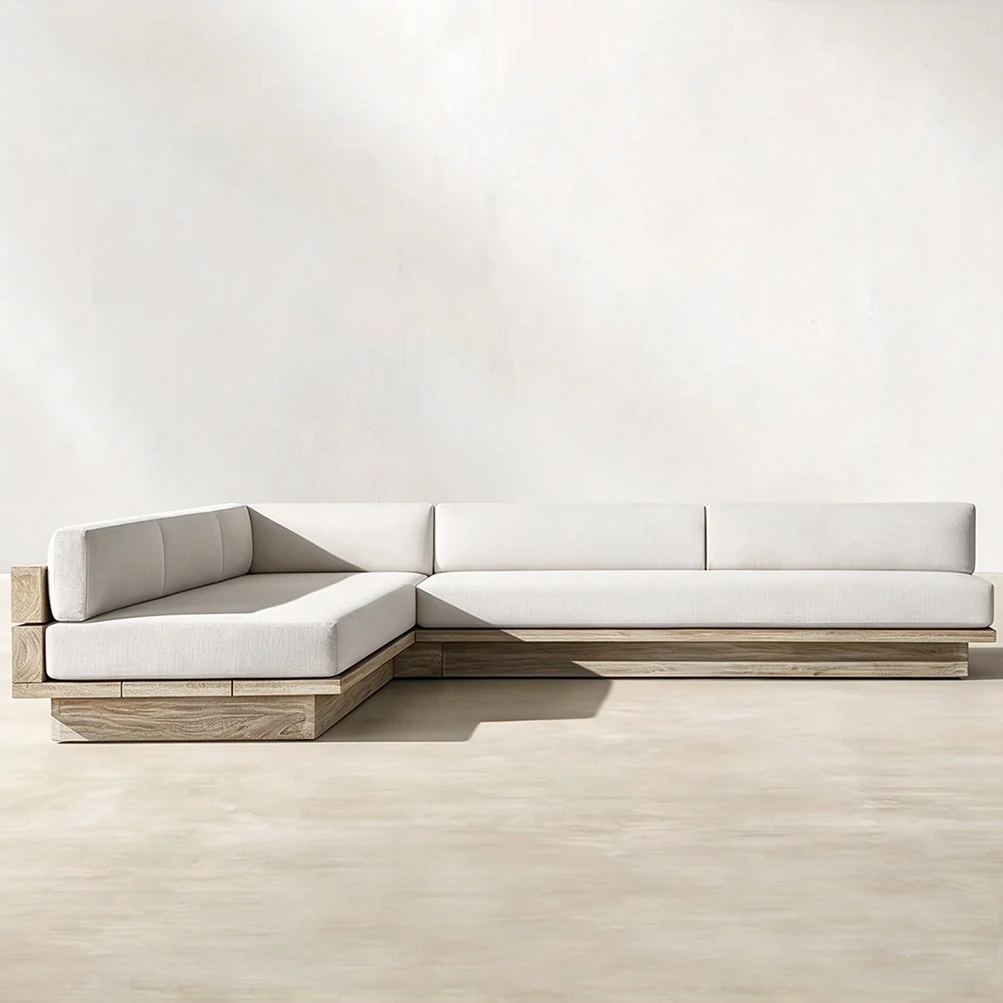
Choosing between an outdoor sofa between sectional and individual is not simply a matter of style. The better configuration depends on how much space you have, how people will use it, and whether you need one defined lounge area or several flexible seating zones.
An outdoor sectional sofa creates a connected seating arrangement that can anchor a larger outdoor living area. Individual sofas, meanwhile, can be positioned separately, making it easier to adjust circulation and divide a space into different functions.
The right choice therefore depends on the relationship between space, usage, and layout. The following six outdoor scenarios show how those factors change the decision.
Outdoor Sectional Sofa vs Individual Sofas: What Is the Difference?
An outdoor sectional sofa combines multiple seating sections into one connected configuration, often forming an L-shape or U-shape. This makes it useful when the goal is to establish one cohesive lounge zone.
Individual sofas provide separate seating units that can be positioned independently. They generally give designers and homeowners more freedom to adjust the distance and orientation between pieces.
| Factor | Outdoor Sectional Sofa | Individual Sofas |
|---|---|---|
| Configuration | Connected seating | Separate seating units |
| Layout flexibility | Moderate | High |
| Concentrated seating | Excellent | Good |
| Distributed seating | Less flexible | Excellent |
| Social interaction | Strong | Flexible |
| Space planning | Requires a defined zone | Easier to rearrange |
| Best use | Unified lounge areas | Flexible or multi-zone layouts |
The main distinction is therefore not simply size. A sectional organizes the space around one seating zone, while individual sofas allow the space to be organized around several smaller zones.
This distinction becomes clearer when the furniture is considered within specific outdoor environments.
Outdoor Sectional Sofa vs Individual Sofas for Different Outdoor Spaces
Large Patios: Choose a Sectional for a Defined Lounge
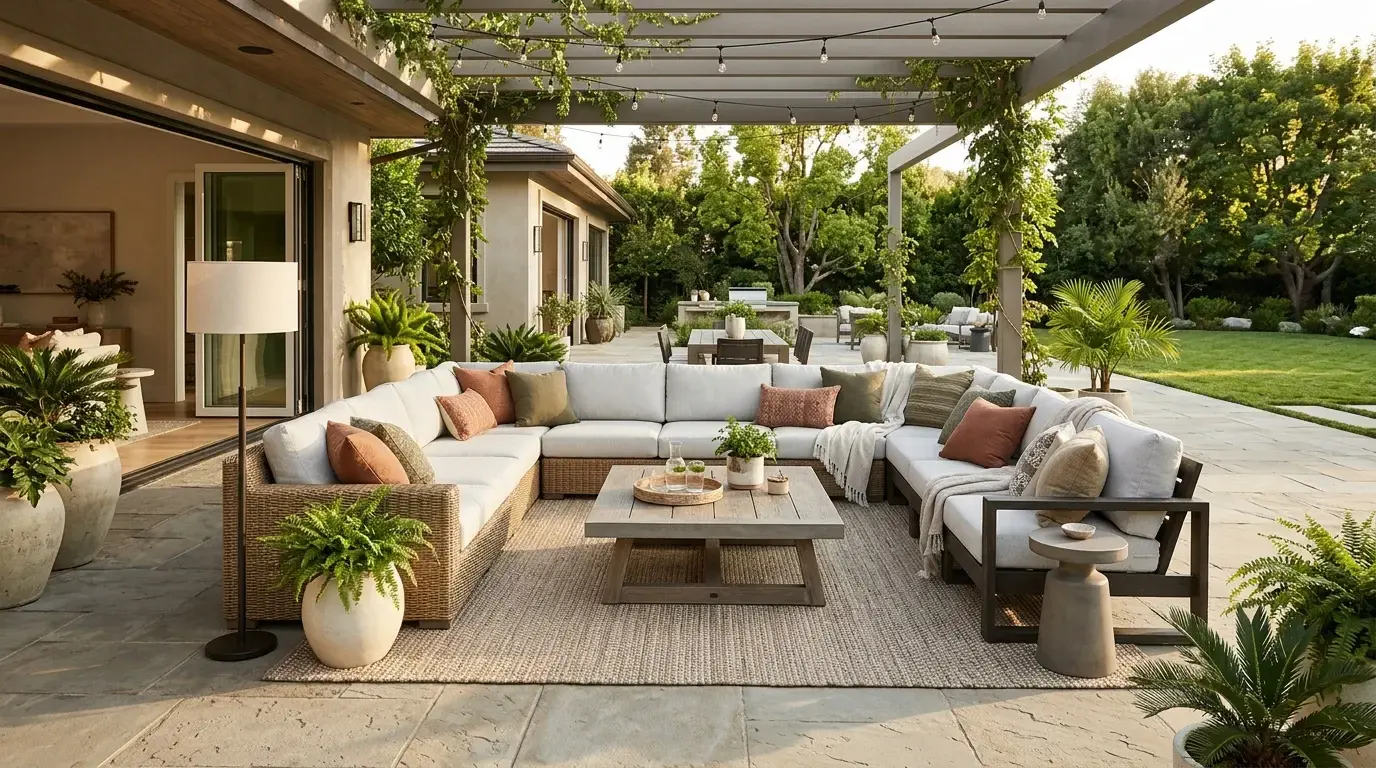
A large patio gives you enough floor area to create a dedicated outdoor living zone. In this situation, an outdoor sectional sofa can provide a strong anchor for the layout and concentrate seating where people are most likely to gather.
For example, a large patio designed for family gatherings or entertaining can use an L-shaped or U-shaped sectional around a coffee table. The connected configuration provides a clear focal point without requiring several separate sofas to be positioned individually. Current outdoor layout guidance similarly treats sectionals as a useful anchor for larger patios and defined seating zones.
Individual sofas can still work on a large patio, particularly when the space contains several functions. However, if the primary goal is to create one large social lounge, a sectional is usually the more direct solution.
Best fit: Large patio + centralized seating + frequent group use → Outdoor Sectional Sofa
Small Balconies and Compact Patios: Choose Individual Sofas for Flexibility
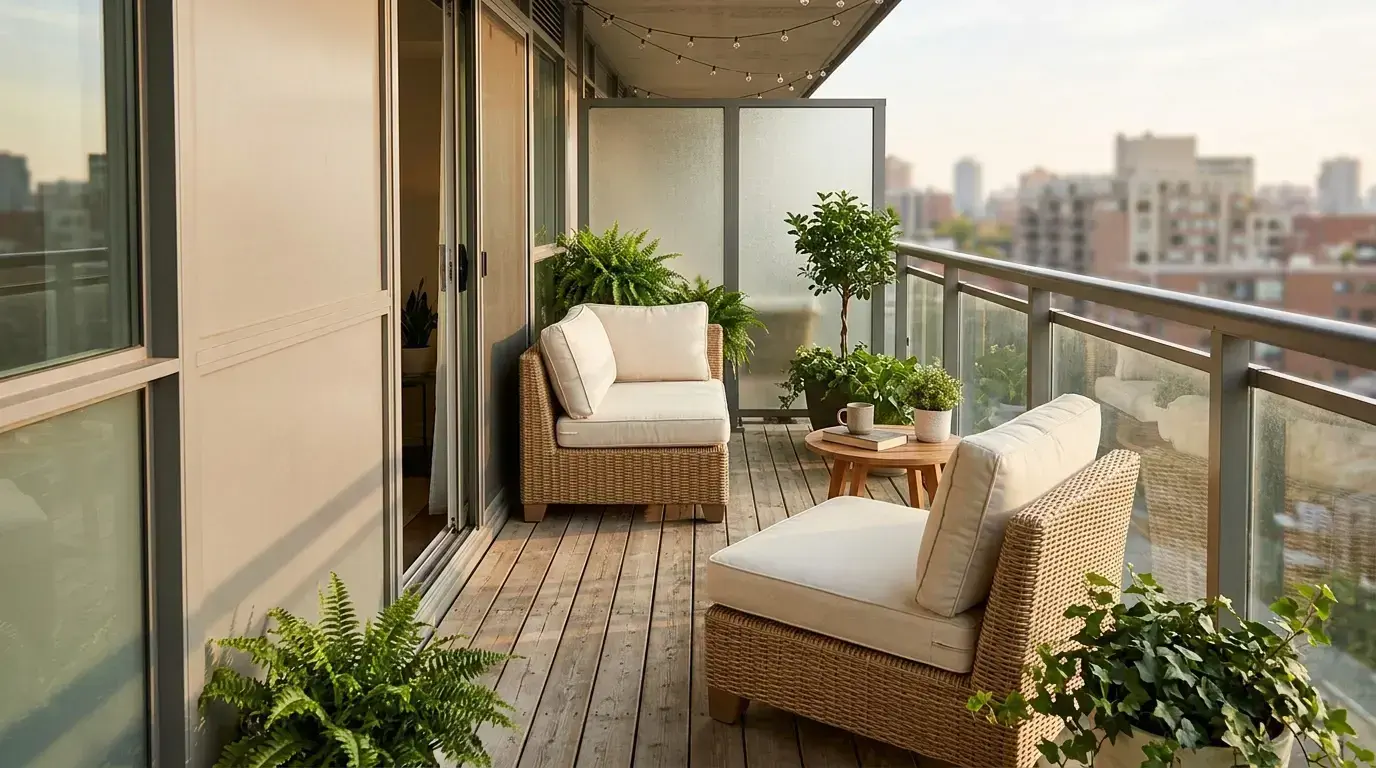
Small outdoor spaces create a different problem. The priority is often not maximum seating capacity but maintaining enough room for movement and other functions.
An individual outdoor sofa can be placed against a wall, beside a railing, or next to another piece without forcing the entire layout to follow the shape of a sectional. This is particularly useful on balconies, narrow patios, and compact terraces where doors, planters, grills, or dining furniture may already occupy part of the available space.
A sectional can work in a small patio when its dimensions are specifically suited to the area, but its larger continuous footprint can make the layout more restrictive. Current outdoor furniture guidance commonly distinguishes compact balconies and patios as spaces where separate seating provides greater placement flexibility.
Best fit: Compact space + circulation priority + flexible placement → Individual Sofas
Villa Terraces: Use a Sectional to Build an Outdoor Living Zone
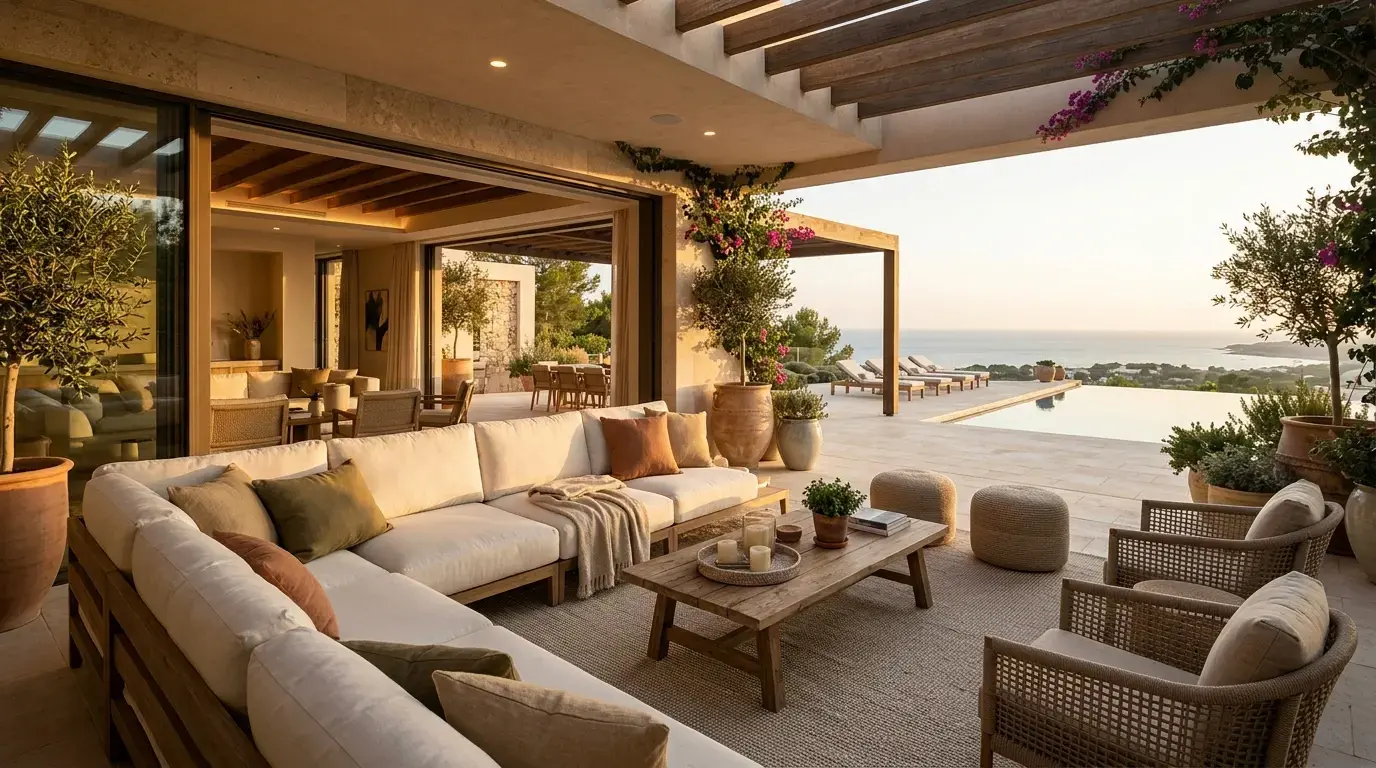
A villa terrace often has enough space to function as an extension of the home’s living area. Instead of treating the terrace as simply a place to put a few chairs, the layout can be organized as a complete outdoor living zone.
An outdoor sectional sofa is well suited to this purpose because it establishes a clear area for conversation and relaxation. A large terrace can position the sectional around a coffee table, facing a view, garden, pool, or other focal point.
The decision should still follow the actual layout. A narrow villa terrace with several access points may benefit from individual sofas, while a wide terrace with one dedicated lounge area can make better use of a sectional.
For larger villa projects, the sofa configuration can also be combined with other outdoor furniture instead of treating the sectional as the only seating type.
Best fit: Large villa terrace + dedicated outdoor living area → Sectional Sofa
Poolside Lounges: Choose Based on Circulation and Seating Distribution
Poolside spaces are more complicated because seating needs to coexist with circulation, access to the pool, and other outdoor functions.
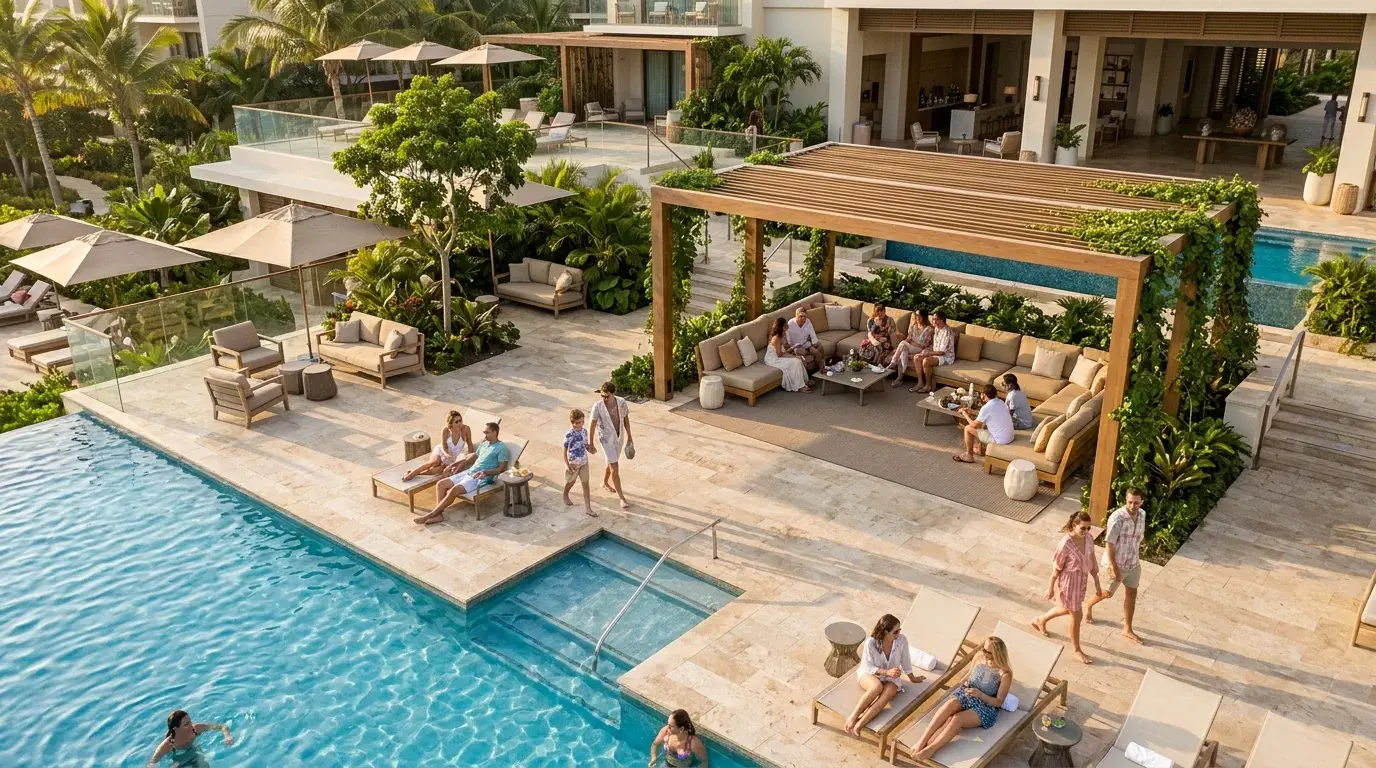
A sectional works well when the pool area contains a clearly defined lounge zone. For example, a large pool deck can place a sectional and coffee table away from the immediate pool edge, creating a dedicated area where several people can sit together.
Individual sofas become more useful when seating needs to be distributed across the poolside. Instead of creating one large seating block, separate sofas can be positioned in different areas according to views, shade, access points, or the desired level of privacy.
Outdoor hospitality products also commonly position sectional seating and sofa configurations in poolside and resort lounge applications, showing that the choice is closely connected to how the zone is organized.
For a large poolside project, there is no reason to use only one configuration. A central social lounge can use a sectional, while smaller areas use individual sofas.
Best fit:
- One main poolside lounge → Sectional Sofa
- Multiple distributed seating areas → Individual Sofas
- Large multi-zone pool area → Combine Both
Rooftop Terraces: Prioritize Flexibility and Functional Zoning
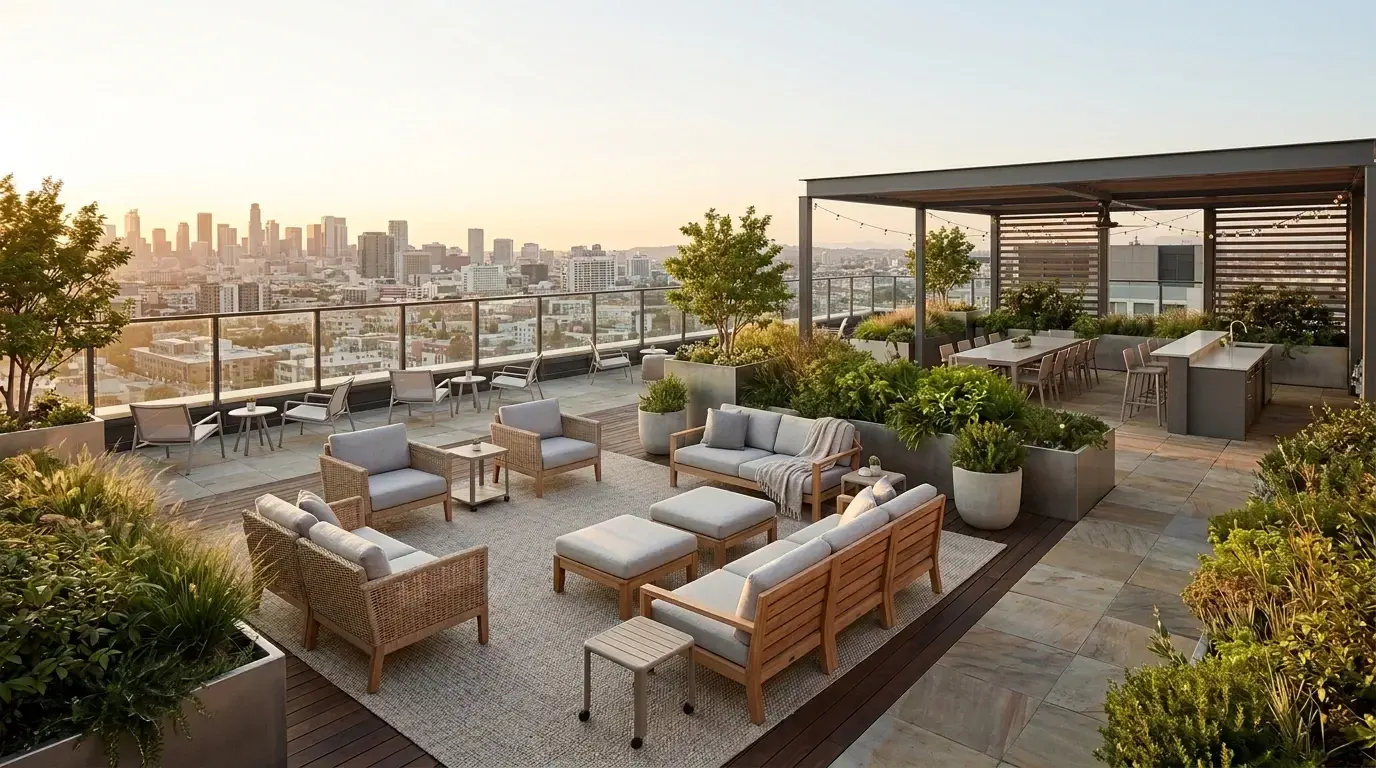
Rooftop terraces often have to accommodate several functions within a limited footprint. A single space may include lounge seating, dining, circulation paths, service access, and areas designed around a particular view.
This makes flexibility particularly important.
Individual sofas can be positioned separately to create smaller seating areas without committing the entire terrace to one continuous configuration. They can also be repositioned when the function of the space changes.
A sectional is still appropriate when the rooftop has a large, clearly defined lounge zone. The important point is that a rooftop terrace should not automatically be treated as either a “sectional space” or an “individual sofa space.” The number of functional zones matters more than the name of the space.
Hospitality furniture planning follows a similar principle: rooftop areas, poolside zones, terraces, and other hotel spaces can require different furniture configurations according to their specific functions.
Best fit: Multi-functional rooftop + flexible zoning → Individual Sofas
Dedicated rooftop lounge → Sectional Sofa can work well
Hotels and Resorts: Combine Both for Different Seating Zones
Hotels and resorts present the strongest case for using both configurations.
A property may contain a large outdoor lounge, pool deck, rooftop terrace, private guest area, and garden or courtyard. These spaces do not necessarily have the same seating requirements.
A sectional can anchor the main social lounge where groups are expected to gather. Individual sofas can then be used in smaller or more separated areas where guests need greater flexibility.
For example:
- Main resort lounge: Sectional sofa
- Poolside social zone: Sectional or modular seating
- Private terrace: Individual sofa
- Smaller courtyard: Individual sofas
- Rooftop lounge: Either configuration depending on zoning
Hospitality furniture suppliers commonly organize outdoor furniture by different property zones, including pool decks, courtyards, terraces, rooftops, and guest areas.
The key is therefore not choosing one sofa type for the entire property. It is matching each configuration to the function of each zone.
Best fit: Large hospitality project + multiple functions → Combine Sectional and Individual Sofas
Outdoor Sectional Sofa vs Individual Sofas: Key Differences at a Glance
The six scenarios can be reduced to several practical differences:
| Factor | Sectional Sofa | Individual Sofas |
|---|---|---|
| Large outdoor spaces | Better suited | Suitable |
| Compact spaces | Requires careful planning | More flexible |
| Layout flexibility | Moderate | High |
| Concentrated seating | Excellent | Good |
| Distributed seating | Limited | Excellent |
| Social lounge | Excellent | Good |
| Multiple seating zones | Less flexible | More flexible |
| Reconfiguration | More limited | Easier |
The pattern is straightforward: sectionals are strongest when you want to define one substantial seating area, while individual sofas are stronger when the space needs flexibility or multiple seating points.
How to Choose the Right Outdoor Sofa Configuration
If your space does not fit neatly into one of the six examples above, use four questions to make the decision.
How Much Space Do You Have?
Start with the actual usable footprint, not just the total patio or terrace size. A large outdoor space can accommodate a sectional more easily, while a compact area may benefit from separate pieces that can be positioned around existing features.
Do You Need One Lounge Zone or Several?
If the goal is to create one central area for conversation and relaxation, a sectional provides a natural structure.
If the outdoor space contains several seating points, individual sofas make it easier to distribute furniture according to each zone.
How Important Is Layout Flexibility?
A sectional generally commits more of the available space to a particular seating configuration. Individual sofas allow greater freedom to change the distance and orientation between pieces.
This matters particularly in multi-purpose outdoor areas or spaces that may be rearranged over time.
Will People Gather Together or Use the Space Separately?
A sectional is naturally suited to group-oriented seating. Individual sofas are more adaptable when users may sit separately or when the space needs several smaller areas.
As a simple decision guide:
Large + centralized + social → Sectional Sofa
Compact + flexible + distributed → Individual Sofas
Large project + multiple functions → Combine Both
Plan Outdoor Seating as Part of the Whole Space
For larger villas, hotels, resorts, and other outdoor projects, choosing between a sectional and individual sofas should be part of a broader space-planning decision.
A complete outdoor area may require several furniture types working together, including:
- Outdoor sectional sofas
- Individual sofas
- Chaise lounges
- Coffee tables
- Outdoor dining furniture
- Other outdoor seating
The objective is not to use the same sofa configuration everywhere. It is to match each piece to the function, circulation, and scale of its zone.
For a project requiring multiple furniture categories, Chicasa suggests adopting a whole-space furniture solution to simplify processes by coordinating the furniture selection around the overall layout rather than treating every product as a separate purchase.
We can support outdoor furniture projects starting from MOQ 1, with DDP delivery, door-to-door delivery with on-site installation, and support for projects outside China. This makes it possible to approach an outdoor space as a coordinated furniture project rather than selecting isolated pieces one at a time.
Conclusion
There is no universally better choice between an outdoor sectional sofa and individual sofas.
A sectional sofa is usually the stronger choice when you have enough space to create one defined lounge area and expect people to gather together. Individual sofas are more suitable when flexibility, circulation, or multiple seating zones are important.
For larger and more complex outdoor spaces, the best solution may be a combination of both.
The key is to start with the space and its intended use, then choose the sofa configuration that supports the way that space needs to function.